
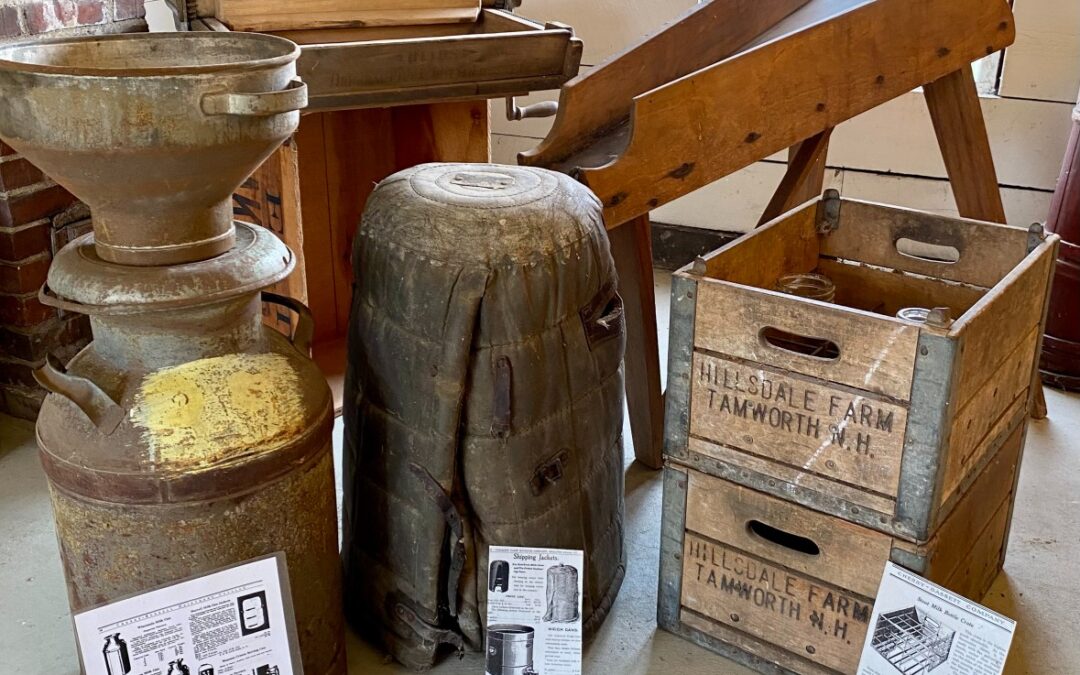
Milk canister, insulated canister, and milk crates at the Milk House
Health, Pasteurization, and the Modern Dairy Industry
by
Prior to the 1930s, raw milk was responsible for a sizable portion of foodborne illnesses, primarily due to unsanitary farming conditions and the commercial pooling of milk from multiple herds. Pasteurization — heating milk to a specific temperature to kill harmful pathogens without ruining its taste — emerged in the early 20th century to combat deadly milk borne diseases like bovine tuberculosis, brucellosis, and typhoid.
Remick Country Doctor Museum & Farm explores rural life through the story of the six generations of the Remick Family who called this New Hampshire place home. The last two generations produced country doctors: Dr. Edwin Remick (1866–1935) and Dr. Edwin Crafts “Doc” Remick (1903–1993), each of whom served the rural community where they were born and raised.
In addition to his medical practice, Doc Remick was a herdsman and established Hillsdale Dairy in 1934 to provide pasteurized milk to nearby Civilian Conservation Corps camps. Trained as both a doctor and a farmer, he understood the health and safety benefits of milk pasteurization and incorporated this technology into his operations. The equipment on display is original and marks the first commercial use of milk pasteurization in Carroll County. Today museum visitors can tour the dairy barn, milking parlor, and pastures that were once home to Hillsdale Dairy.
Before his death in 1993, Dr. Edwin C. Remick created a foundation to preserve the family farmstead and history of the country doctor in a way that the public could directly learn from and enjoy. The Remick family’s 200-year-plus history in Tamworth gives us a glimpse into how people farmed, worked, and played in this idyllic landscape.